White Lithium Grease Check price

White Lithium Grease: Uses, Benefits & Best Spray, Tube & Aerosol Formats

White Lithium Grease Spray, Tube & Aerosol Lubricant

White lithium grease is the thick, chalky-white lubricant people reach for when a metal part has to keep moving and keep rust out at the same time. It clings instead of running off. One pass on a hinge pin, a garage door track or a tailgate latch leaves a protective film that shrugs off water and keeps working for months, not days.

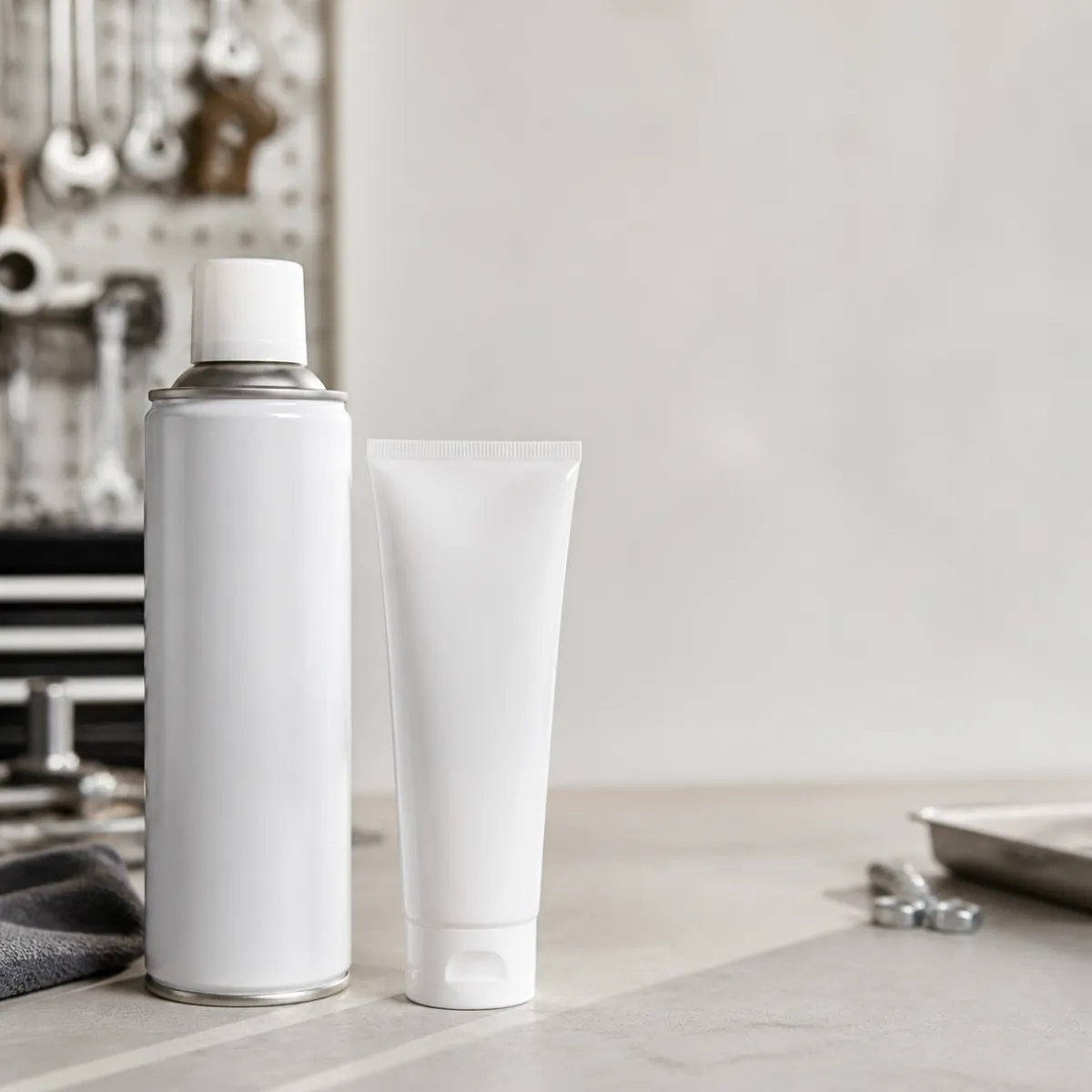
You'll see it on the shelf in three shapes: an aerosol can for spray work, a squeeze tube for pinpoint dabs, and a cartridge or tub for bigger jobs. Same chemistry underneath, different delivery. Pick the wrong one and a five-minute job turns into a mess; pick the right one and you get long-lasting lubrication with almost no cleanup.

Below: what it actually is, where it earns its keep, where it will let you down, and how to choose a format without guessing.

Check price

Stock and pricing on Amazon move around week to week, so it's worth checking today's listing before you commit.

  • Aerosol can — spray work
  • Squeeze tube — pinpoint dabs
  • Cartridge or tub — bigger jobs
White lithium grease aerosol can, squeeze tube and tub lined up on a workbench

What Is White Lithium Grease? Lithium Soap Grease Composition

  • Base oildoes the actual lubricating
  • Lithium soapholds that oil in place
  • Additivesgive the product its white color and its staying power
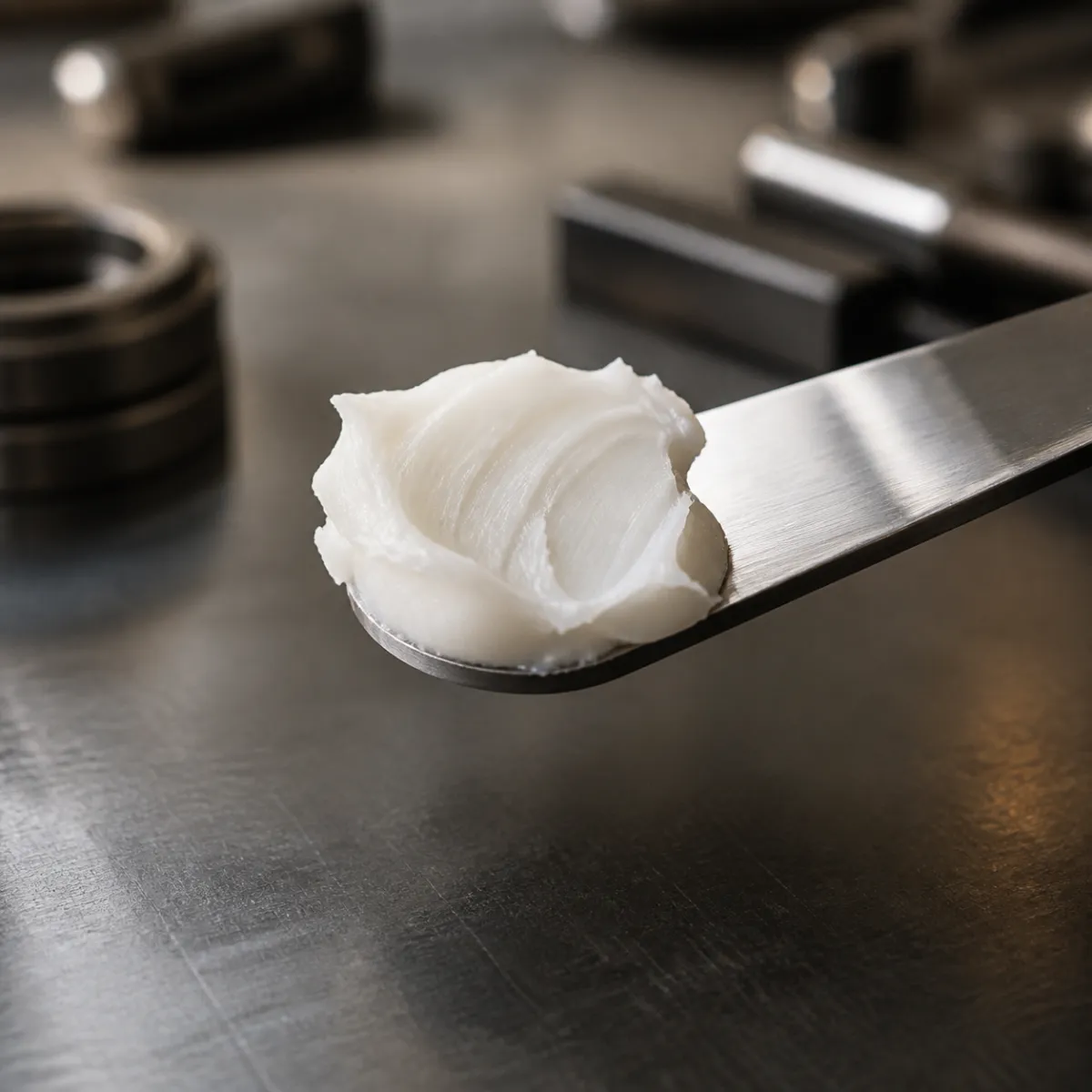
Close-up of thick white lithium soap grease on a metal spatula

White lithium grease is a semi-solid lubricant made from three things: a base oil that does the actual lubricating, a lithium soap thickener that holds that oil in place, and additives that give the product its white color and its staying power. The white comes from a pigment such as zinc oxide; some formulas also carry PTFE (polytetrafluoroethylene) for extra slip under load.

Think of a grease lubricant as oil plus a sponge. The lithium soap is the sponge. Squeeze a bearing or a hinge and the sponge releases oil at the contact points; release the pressure and it soaks the oil back up. That's why grease stays on a vertical surface for a season while penetrating oil is gone by the weekend.

Lithium soap dominates the market because it handles water and moderate heat better than the cheaper soda- and calcium-based thickeners it replaced, and it works with a wide range of base oils.

White Lithium Grease vs. Lithium Complex Grease vs. White Lithium Grease Spray

This is the question that sends people to Reddit before they reach the checkout, so here's the short answer.

"White lithium grease" and "white lithium grease spray" are the same product in a different can. If the label says white lithium and the can is an aerosol, you're holding an aerosol version of the same lithium-soap grease sold in tubes. The spray version is thinned with a carrier so it can atomize; the carrier flashes off in a minute or two and leaves the grease behind. Buy either one with confidence.

Regular lithium grease is usually the same thickener family without the white pigment, so it's often amber, brown or red, frequently loaded with extra-pressure additives for chassis and wheel bearings. It lubricates just as well. You simply can't see where it went, which matters more than it sounds when you're checking your work on a door track.

Lithium complex grease is the upgrade. The thickener is built with a second acid, which pushes the dropping point higher and lets it withstand more heat and heavier loads. If a part runs hot or carries real weight, lithium complex is the better call. For hinges, tracks, cables and household hardware, standard white lithium is plenty.

Grease Lubricant Basics: PTFE, Lithium Soap & Lubrication Film

Three numbers on a label tell you most of what you need. Base oil viscosity sets how easily the film flows into a tight joint. NLGI grade describes how stiff the grease is (more on that below). PTFE content, when present, adds a dry-film component that keeps surfaces apart during the moment of startup, before the oil film builds.

That layer is the whole point. Metal on metal without a lubrication film means galling, squeal and wear. A few thousandths of grease reduces that contact to almost nothing, and because it doesn't drain away, it's still there next month.

Benefits of White Lithium Grease: Corrosion Protection & Long-Lasting Film

Manufacturers all promise superior lubrication. Here's what that means once the can is in your hand.

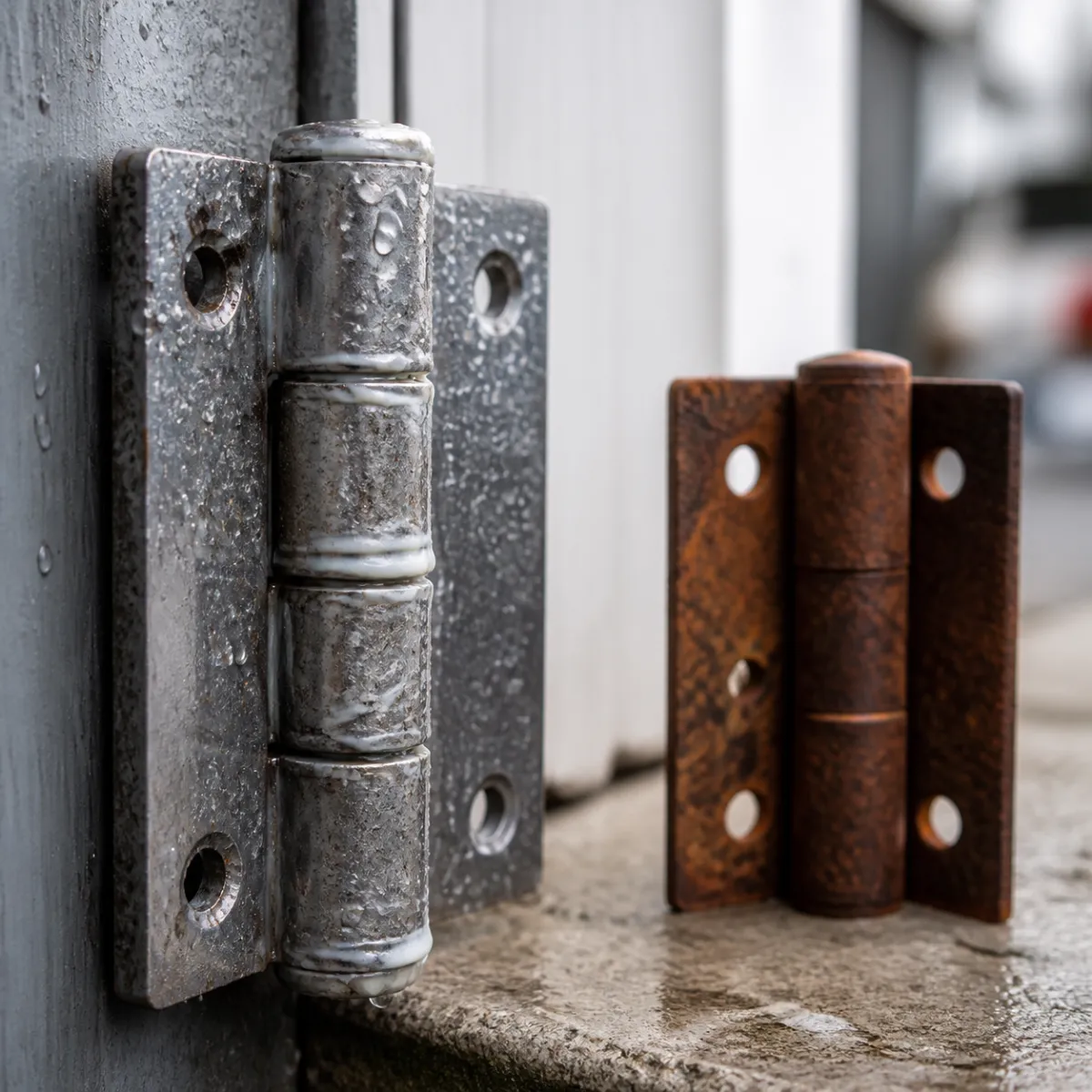
White grease film protecting a metal hinge from rust and water

Rust & Corrosion Protection for Metal-to-Metal Applications

The grease seals moisture off the steel it covers. On metal-to-metal applications like door hinges, spring anchors, throttle linkages and boat trailer parts, that barrier is doing two jobs at once: cutting friction and blocking the corrosion that seizes parts in the first place. It's water resistant enough that a rainstorm won't wash the film off an exposed hinge, which is exactly why it outlives spray oils outdoors.

Long-Lasting, Superior Lubrication That Reduces Friction

Grease stays. That's the durability argument in one word. A light oil migrates off a vertical pin in a few weeks; a lithium soap film holds position and keeps releasing oil as the joint works. Most consumer white lithium products are rated by their makers for roughly 0°F to 300°F, which covers a driveway in January and an engine bay in August. Check the technical data sheet for the exact range on the product you buy — the numbers vary by formula.

Ideal Protective Film for High-Performance, Heavy-Duty Use

The visible white color is a genuinely useful feature, not marketing. You can see coverage on a dark track, spot the gaps, and confirm you actually hit the pivot instead of the bracket next to it. Combined with a film that will withstand heavy loads at slow speeds, that makes it an ideal choice for gates, jacks, gears and heavy-duty hardware that gets used hard and inspected rarely.

Check price

One can usually covers every squeaky point in a house and a garage. Check the current price and pack sizes.

White Lithium Grease Formats: Aerosol, Squeeze Tube, Cartridge & Tub

Nobody explains this well, so buyers guess and end up with an aerosol when they needed a tube. Here's the whole map.

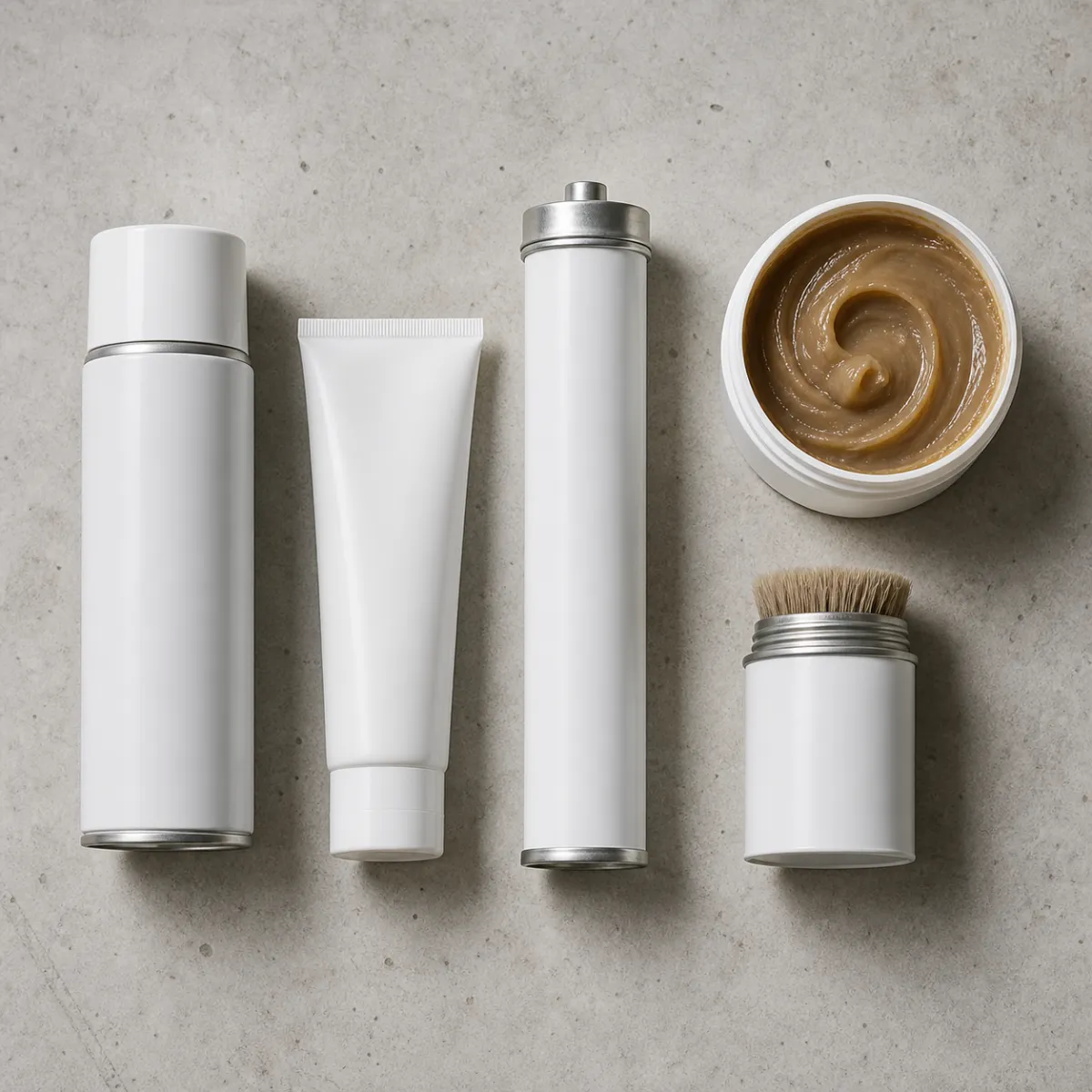
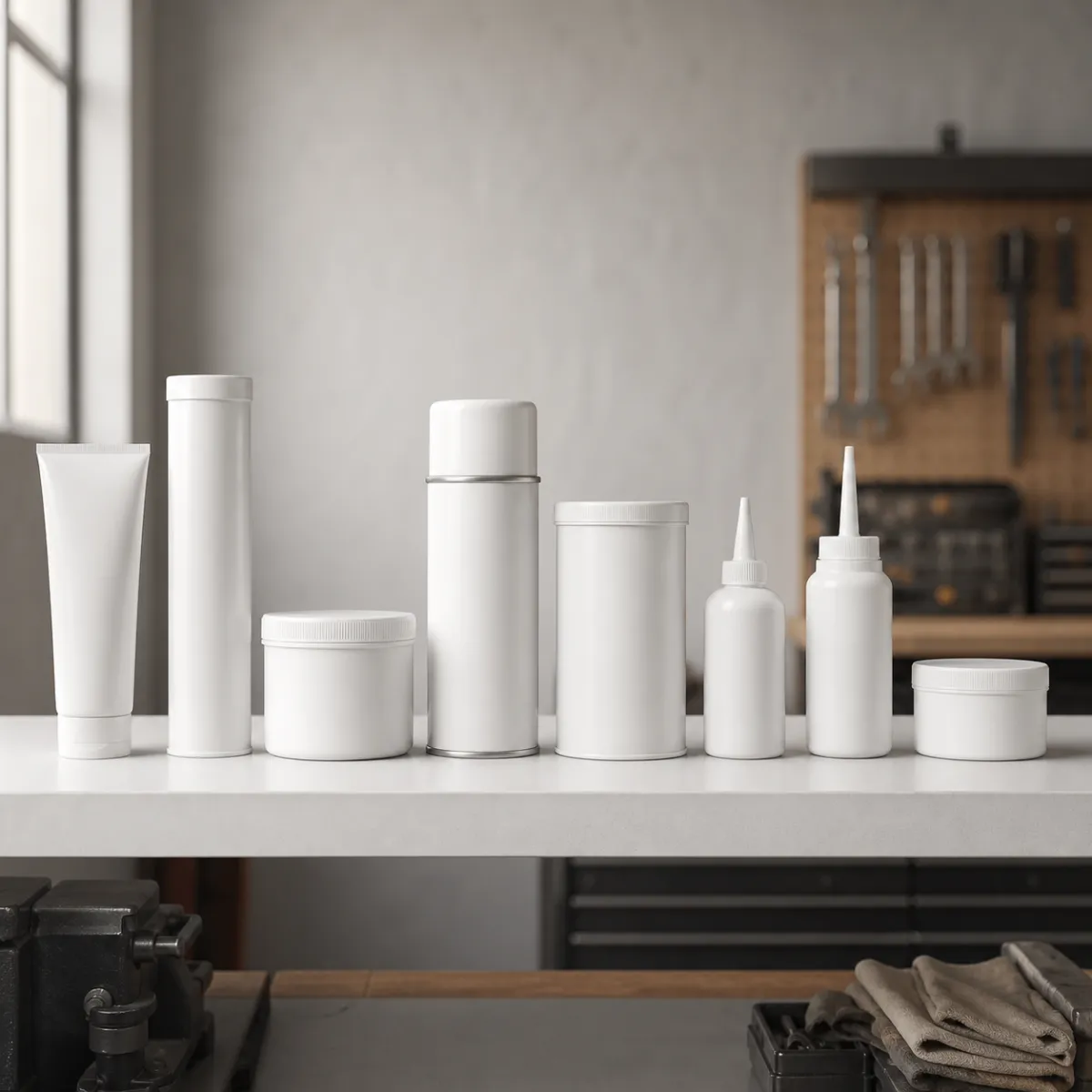
Five white lithium grease formats: aerosol, tube, cartridge, tub and brush-top
White lithium grease formats, sizes and trade-offs
FormatTypical sizesBest forTrade-off
Aerosol spray can 10–16 oz Overhead work, door tracks, cables, springs, anything you can't reach with a finger Overspray; mask nearby glass and paint
Squeeze tube 8 oz tube (the common 8 ounce size), plus small 1.5 oz tubes Pinpoint work on hinges, latches, threads, lock bodies Slow if you're covering a large surface
Grease cartridge ~14 oz Grease-gun work: farm equipment, trailer zerks, chassis fittings You need a gun
Tub 8–16 oz Packing gears and bearings, brushing onto big parts during assembly Messy without a brush; an open container can collect grit
Brush-top jar or stick small Bike chain plates, garage door rollers, gear teeth, precise edges Small volume, not for repeat jobs

Aerosol Spray Cans vs. Squeeze Tube & Cartridge Kits

The aerosol wins on reach. A straw-equipped can (the WD-40 white lithium grease can with its Smart Straw two-way spray is the best-known example) puts grease into a hinge barrel you can't see, and it works overhead without you standing under a drip. The trade-off is control: aerosol goes everywhere the nozzle points.

A squeeze tube gives you the opposite. Full control, zero overspray, a bead exactly where you want it. AGS built its Lith-Ease line around that idea and calls it pinpoint lubrication, which is a fair description of what a tube does well.

A cartridge only makes sense if you own a grease gun, but then it's the cheapest way to buy grease by volume and the only practical way to service zerk fittings on a trailer or a tractor. Some brands sell a starter kit that pairs a gun with cartridges.

8 oz vs 8 Ounce Tub: Choosing the Right Size & Kit

For household and light auto work, one 8 oz tube plus one aerosol covers essentially everything: the tube for hinges and latches, the can for tracks, cables and anything overhead. Go to a 16 oz tub only if you're packing bearings or greasing gears by hand, where you want to load a brush rather than squeeze a tube fifty times.

Expert tip: buy the small tube even if you also buy the can. Grease that's easy to apply gets applied. A tube in a kitchen drawer fixes a squeaky cabinet hinge in ten seconds; a can in the garage waits until the noise is unbearable.
Check price

Tube, aerosol, cartridge and tub sizes sit side by side on Amazon — compare the current options.

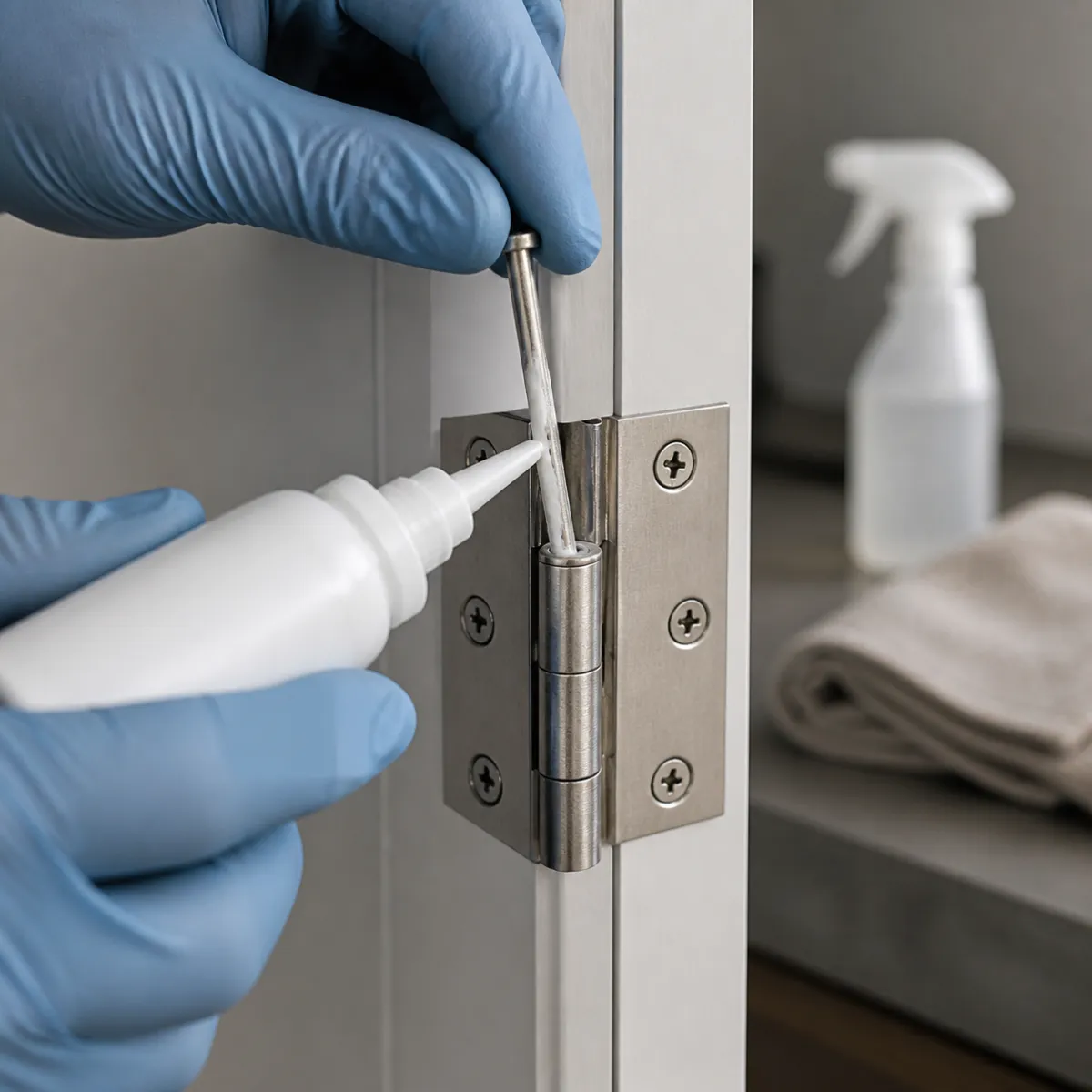
Applying a thin bead of white lithium grease to a door hinge pin

How to Apply White Lithium Grease: Drip, Joint & Precision Application

Application is where most of the value is won or lost. Grease on a dirty joint traps grit and grinds the part faster than no grease at all.

3-Step Method to Lubricate Hinges and Moving Parts

Clean first. Wipe old grease, dust and rust off the moving parts with a rag; use a degreaser or a brass brush on anything caked. If the joint is rusted stiff, free it with penetrating oil, work it loose, then wipe it dry. Grease is a sealer — whatever is under it stays under it.

Apply thinly to the contact points. With the aerosol, hold the nozzle a few inches away and use short bursts, or fit the straw and go straight into the pivot. With the tube, lay a thin bead on the wear surface itself. More is not better. A heavy layer squeezes out, attracts dirt and drips.

Work the part, then wipe. Open and close the hinge, roll the door, cycle the latch a dozen times so the film spreads over the whole bearing surface. Wipe the excess. Done right, the joint moves smoothly and silently and there's nothing left to catch dust.

Lube Application Tips for Squeaky Door Hardware

For a squeaky interior door, lift the pin partway, run a thin bead down it, and drop it back. Cleaner than spraying and it never marks the paint. For overhead garage door tracks, grease the rollers and the hinge points, not the track face itself; grease on the running surface just collects grit. Tape a piece of cardboard behind whatever you're spraying and you'll never have to scrub a drip off a wall.

If you regularly work in tight spaces, a precision applicator or pen-style gel lube saves more time than it costs.

Best Uses for White Lithium Grease by Application

The short version: slow-moving metal parts that live outdoors or get forgotten. Here's where that plays out.

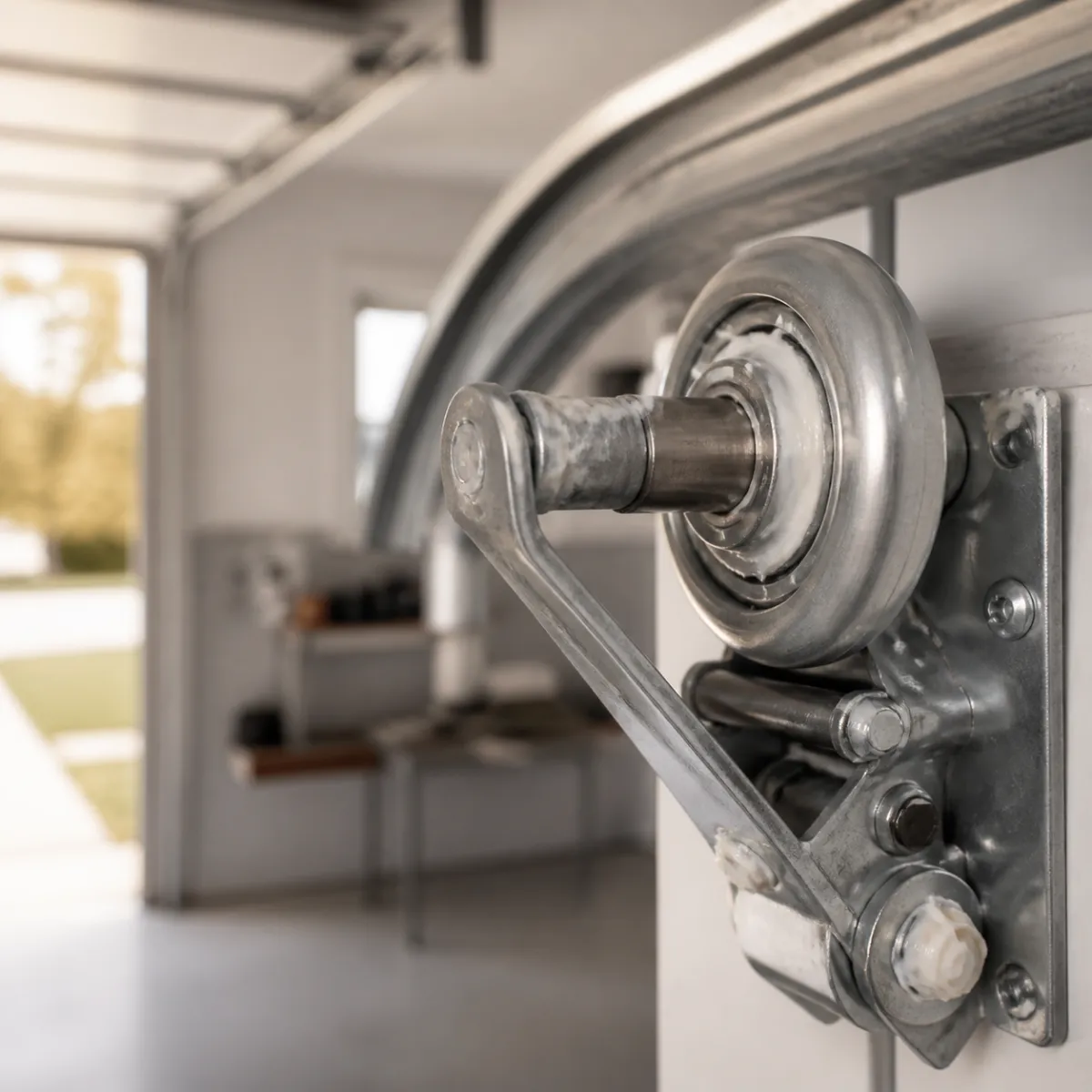
Garage door roller and hinge points greased with white lithium grease

Automotive & Auto Parts Lubrication

Automotive work is where most people meet this product. Door hinges, hood latches, trunk and tailgate hinges, seat rails and window regulator channels all take white lithium well. It's also the standard choice for battery terminals after cleaning, where the coating blocks the corrosion that causes phantom electrical faults. Under the hood, use it on linkages and pivot points, not on wheel bearings or CV joints — those need a purpose-built extreme-pressure or lithium complex product. Any auto parts store carries it; that's usually a better hunting ground than the hardware aisle.

Gear, Bearing & Motor Applications

Slow, low-load gear trains are the sweet spot: winch gears, garage door opener drive gears, jack screws, gate operators, hand-crank mechanisms. It's suitable for lightly loaded plain bearings and bronze bushings, and for the exposed gearing on a motor housing that gets serviced once a year. High-speed sealed bearings are a different problem, covered below.

Marine, Boat & Outdoor Rail Protection

Salt is relentless, and a marine environment eats untreated steel. White lithium on trailer hinges, hatch hardware, boat rails, rod holders, canvas snaps and winch mechanisms gives you a visible barrier you can inspect at a glance. Reapply after a season of salt water; you'll see when it's thin. For submerged or constantly soaked hardware, a dedicated marine grease resists water washout better.

Garage Doors, Door Tracks & Door Hinges

This is the single most common household job. Grease the rollers, the hinge points, the spring bearing plates and the top of the torsion springs; leave the track face and the nylon roller wheels alone. A garage door that groans on the way up usually goes quiet with about two minutes of work. Same story for gate hinges, storm doors and any exterior door hinge that has started to talk.

Farm Equipment & Bike Chain Lubrication

On farm equipment, the cartridge format plus a grease gun handles zerk fittings on implements, trailer couplers and PTO shields, while the aerosol reaches deck pivots and chainsaw bar nuts. On a bike, white lithium suits the parts a wet chain lube shouldn't touch: seat post threads, cable ferrules, pedal threads, kickstand pivots. Purists use a dedicated chain lube on the chain itself because grease picks up road grit, and they're right for a road bike; for a kid's bike that lives on a driveway, white lithium on the chain plates is fine and lasts far longer.

Cable, Latch & Multi-Purpose Home Use

Sliding window tracks, screen door rollers, gate latch bolts, throttle and brake cable ends on outdoor equipment, folding-ladder pivots, tool-chest drawer slides, treadmill and home-gym machine pivots, even 3D printer lead screws. As a multi-purpose lubricant for home use it's hard to beat, because everything it touches is metal, slow and exposed.

Check price

One tube plus one can handles this entire list. See what's in stock right now.

Rubber weatherstripping and plastic gears that need silicone grease instead

When Not to Use White Lithium Grease: Mechanical Limits & Cautions

An honest list of limits is worth more than another paragraph of benefits.

Avoid on High-Friction Bearings & Extreme-Temperature Parts

High-speed bearings — electric motor bearings, spindles, anything spinning at thousands of RPM — will churn a standard NLGI #2 grease, heat it and throw it out of the race. Use the bearing manufacturer's specified grease instead. Same for parts that see extreme temperatures: brake hardware, exhaust fasteners and turbo linkages run far past the roughly 300°F ceiling most white lithium formulas quote, and the base oil will cook off and leave a varnish. High-pressure sliding contacts (fifth-wheel plates, heavy chassis pins) want an extreme-pressure or moly product with a mechanical additive package built for the load.

Don't use it on anything food-adjacent unless the label carries an NSF H2 registration, and keep it off precision electronics and firearm actions, which have their own purpose-built lubricants.

Premium Alternatives for Plastic & Rubber Surfaces

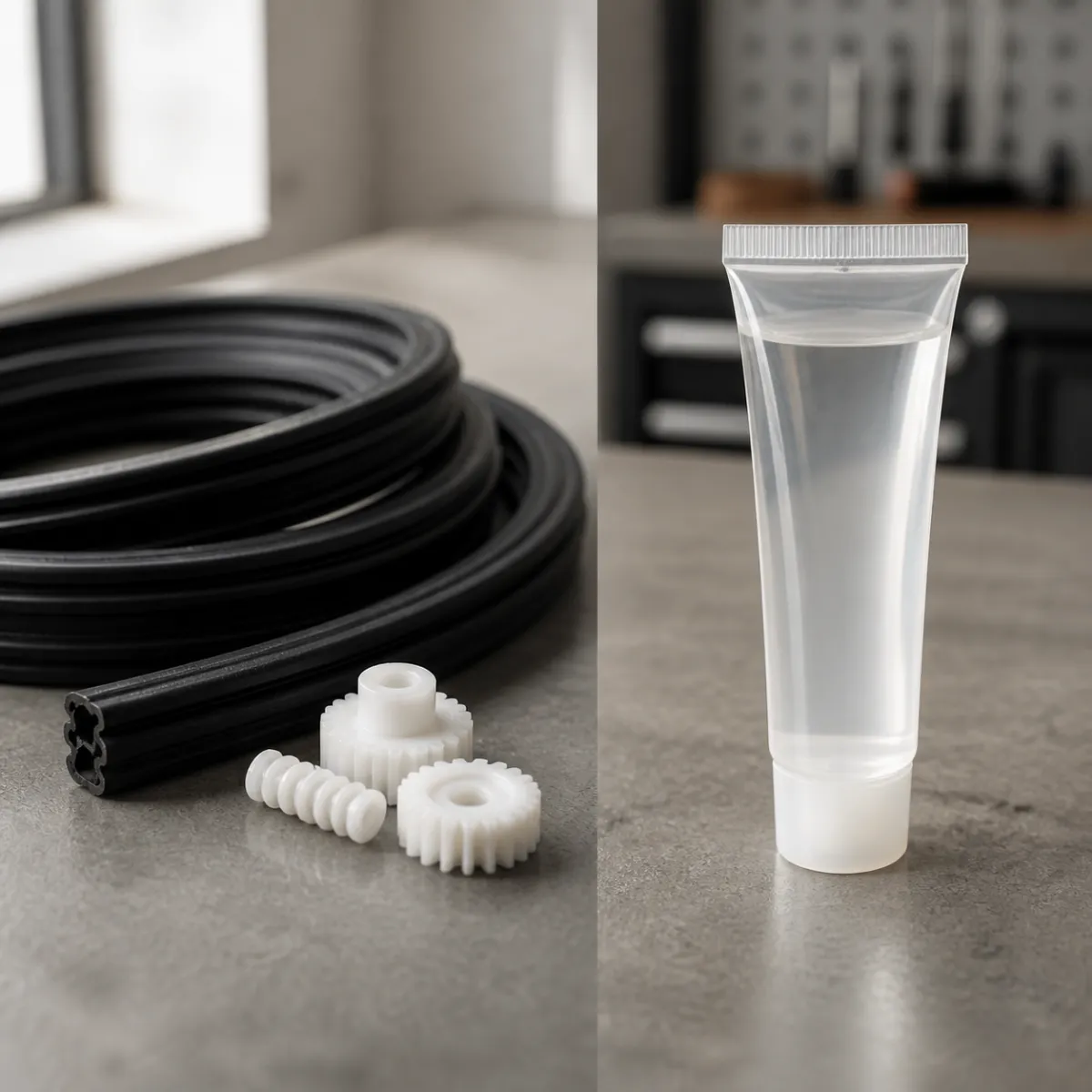
Petroleum-based grease and rubber are a bad match. The oil swells and softens most rubber and can craze certain plastics, so door weatherstripping, rubber bushings, O-rings and plastic gear sets should get silicone grease instead. Silicone is the premium answer for plastic-on-plastic and rubber-on-metal contact, and it costs very little more. Some plastics tolerate lithium grease fine, but unless you know the polymer, silicone is the safe default. Dielectric grease covers electrical connectors and bulb sockets.

Grease Lifespan: How Long White Lithium Grease Will Last

Indoors on a light-duty hinge, a single application will commonly last a year or more. Outdoors, in rain, dust or salt, plan on refreshing it every season. In an unopened container the product itself keeps for years, though aerosols lose propellant pressure over time and separated grease in a tub should be stirred back together before use. The visible check is easy: if you can still see white on the part, the film is working. If it's grey and gritty, wipe it off and reapply.

Tube for precision, aerosol for reach, cartridge for a grease gun, tub for packing bearings — the format decides how the job goes.

Check price

NLGI Grease Grade & PTFE Quality Standards Explained

Almost nobody writing about this product mentions the one standard that actually classifies it, so here it is.

Reading the NLGI grade and temperature range on a grease product label

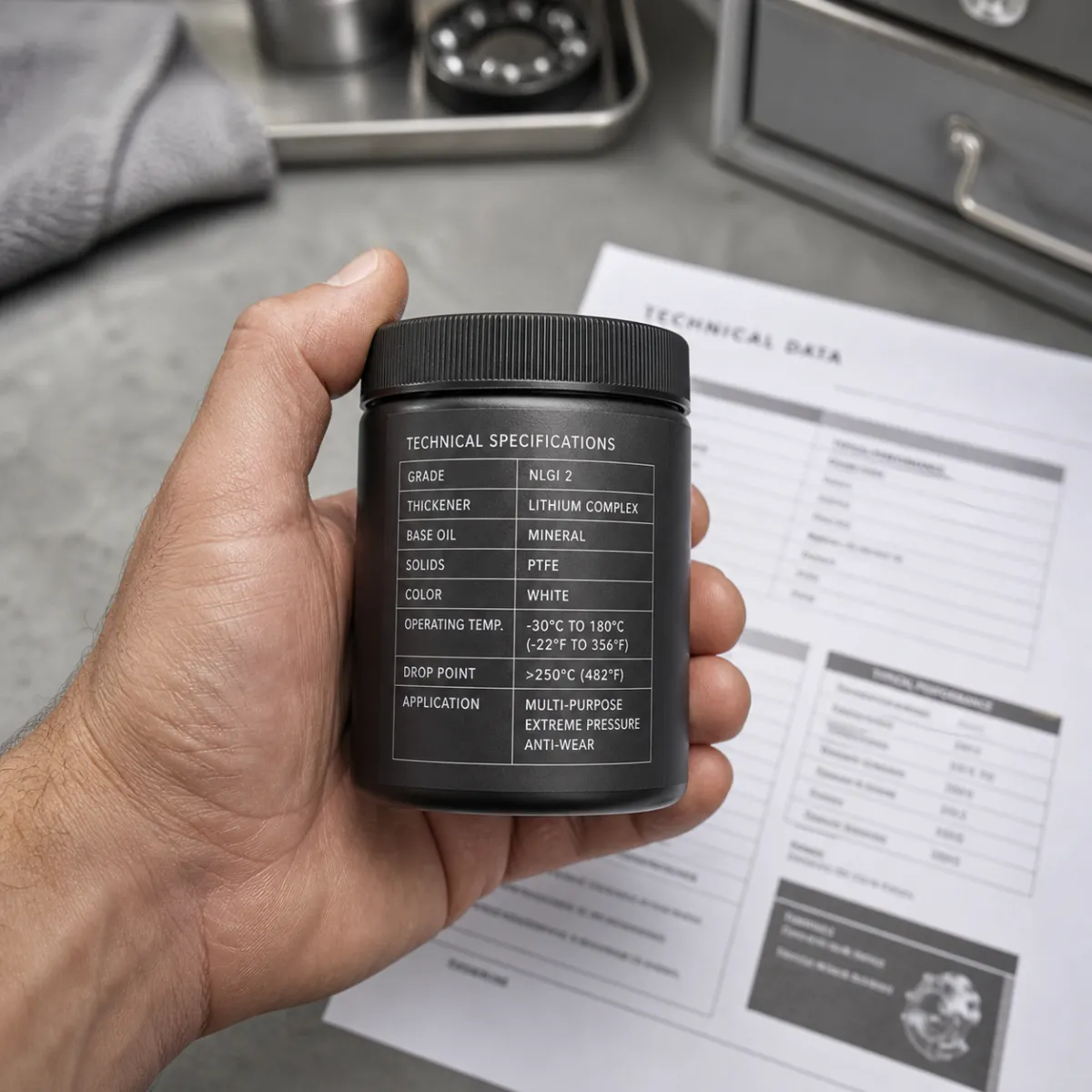
NLGI grades come from the National Lubricating Grease Institute and describe consistency, not quality: how stiff the grease is at room temperature, measured by a worked penetration test. The scale runs from 000 (nearly fluid) to 6 (block hard). NLGI #2 is the general-purpose middle of the scale, roughly the consistency of peanut butter, and it's what the great majority of white lithium products are: Lucas Oil publishes NLGI #2 for its white lithium, and tub products from smaller brands do the same. If a label doesn't state a grade, the SDS or technical data sheet usually will.

PTFE content is the second differentiator. A PTFE-fortified formula adds solid particles that stay between surfaces when the oil film is squeezed thin, which helps at startup and under shock loading. Jet-Lube's white lithium all-purpose grease is one of the products that publishes both PTFE content and an NSF H2 registration.

High-Performance White Lithium Grease Certifications (AGS, WD-40 Specialist)

Certifications are the cheapest way to separate a genuine high-performance white lithium grease from a generic one:

  • NSF H2registration means the lubricant is cleared for use in food-processing areas where there's no possibility of food contact. WD-40 Specialist White Lithium Grease carries registration #146864.
  • ASTM D3233Ais a film-strength (Falex) test. WD-40 references a D3233A result dated 10/2024 from its own technical center to support a claim of handling substantially more pressure than the products it was tested against. Brand-run testing isn't independent testing, but a dated, named test method still beats an unsupported adjective.
  • SDSand technical data sheets should be downloadable. AGS, WD-40, CRC and Jet-Lube all publish them. If a seller won't show you either document, that tells you something.

Before you buy, glance at the listing for an NLGI grade, a stated temperature range and a PTFE mention. Products that publish all three tend to be the ones worth owning.

Check price

Compare spec sheets and formats in one place — check current Amazon listings.

White Lithium Grease Lubricant Comparison: Top Brands & Multi-Purpose Kits

No independent side-by-side comparison exists for this category, so this is the one we'd want when standing in the aisle. Everything below is drawn from what each manufacturer publishes; blank cells mean the brand doesn't state it, which is itself useful to know.

Published specs by brand — format, NLGI grade, PTFE
ProductFormatNLGI gradePTFEWhat stands outPrice
WD-40 Specialist White Lithium Grease 10 oz aerosol, two-way Smart Straw not published no NSF H2 #146864; dated ASTM D3233A film-strength test; best reach into blind pivots Check price
Lucas Oil 10533 8 oz squeeze tube NLGI #2 no Long-running category best seller; the default tube for hinges and garage doors Check price
AGS Lith-Ease tube, tub, cartridge, brush-top, stick not published no Widest format range of any brand; "won't melt, freeze, gum up or run off"; making grease since 1931 Check price
CRC White Lithium Grease 10 oz aerosol not published no Publishes a 0°F–300°F working range; strong general-purpose aerosol Check price
Jet-Lube White Lithium All-Purpose tub / cartridge not published yes NSF H2 registered and PTFE-fortified — the pick for food-area equipment Check price
LPS White Lithium Grease w/ PTFE 16 oz aerosol not published yes PTFE in an aerosol; large can for shop use Check price
Permatex 80345 1.5 oz tube not published no Glovebox-sized; good for a toolbox or trunk kit Check price
Ambro-sol White Lithium Grease aerosol not published no Widely stocked European aerosol line Check price

Multi-Purpose Lubricant vs. Purpose Grease: Which to Buy

Several brands of white lithium grease lined up for comparison

A multi-purpose grease covers slow metal parts across a house, a car and a boat trailer with one product, and for most people that's the correct answer. A purpose-built grease wins only where the application is extreme: wheel bearings, high-speed motors, brake hardware, submerged marine gear. Buy the multi-purpose can and tube first. Add a specialist product the day you actually meet an application that needs one.

Check price

Formats, pack sizes and brand availability change constantly — check today's options.

White Lithium Grease FAQ

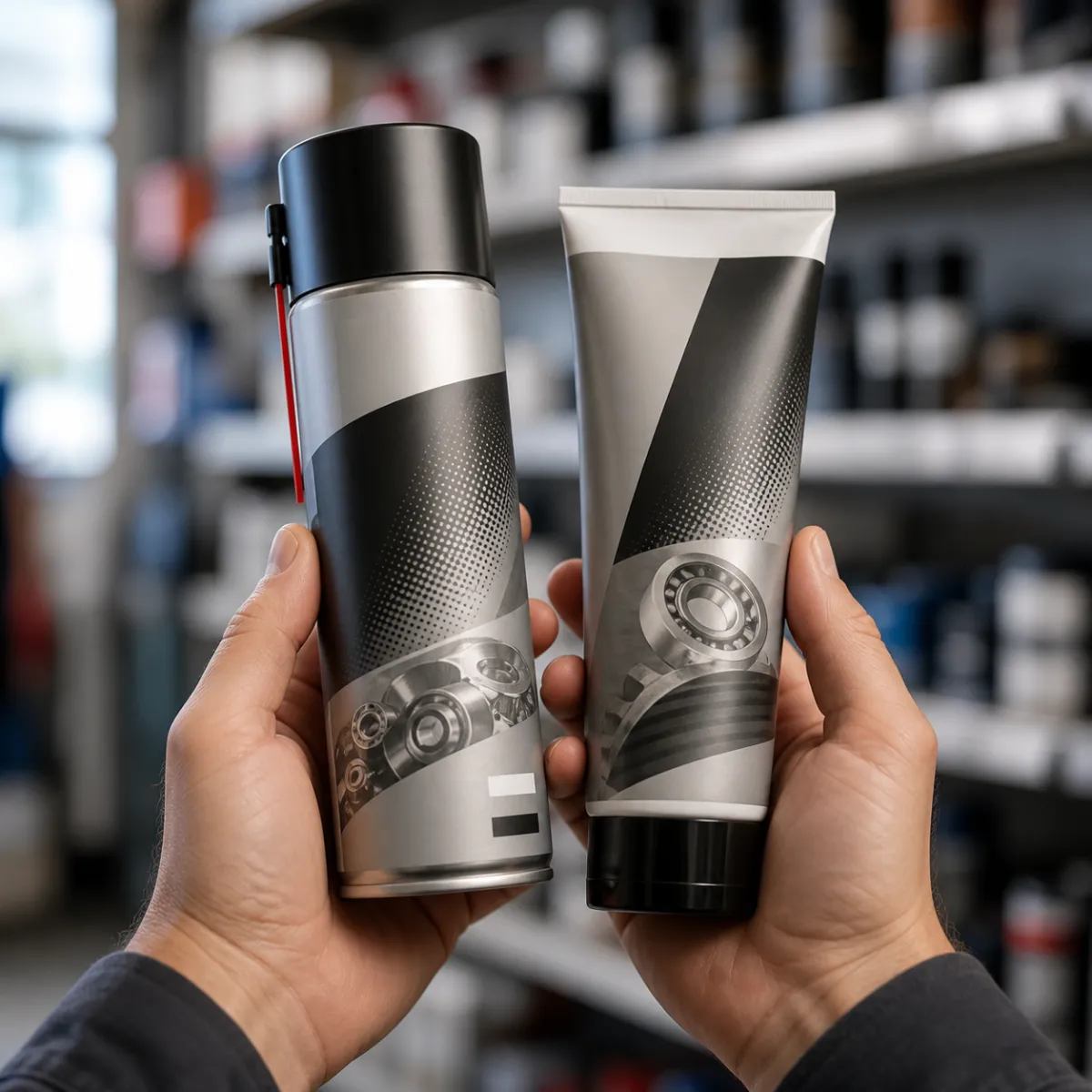
Comparing a white lithium grease spray can and a white lithium grease tube

Is White Lithium Grease the Same as White Lithium Spray Grease?

Yes. Same lithium-soap grease, packaged in an aerosol with a carrier that lets it spray and then evaporates. If the label says white lithium grease spray, it's the product you were sent to buy.

What's the Difference Between White Lithium Grease and Regular Lithium Grease?

The thickener chemistry is closely related; the visible difference is the white pigment. Regular lithium grease is typically amber or red and often carries extra-pressure additives for chassis and bearing work. White versions are easier to see on the part and are aimed at general metal-to-metal use.

What Is White Lithium Grease Best Used For?

Slow-moving metal parts that need a lasting film: door hinges, garage door rollers and hardware, latches, seat rails, window channels, gate hardware, cables, winches, jacks and light gear trains.

Where Should You Not Use White Lithium Grease?

Rubber and most plastics, high-speed bearings, brake and exhaust components, anything above roughly 300°F, and electrical connectors. Silicone or dielectric grease handles those.

Does White Lithium Grease Protect Against Rust?

Yes. The film is a physical moisture barrier, and corrosion protection is one of the main reasons to choose it over a light spray oil on exposed outdoor hardware.

Will White Lithium Grease Melt or Freeze in Extreme Temperatures?

Within its published range — commonly around 0°F to 300°F for consumer formulas — it won't melt off or freeze solid. Past the top of that range the base oil bakes out; well below the bottom it stiffens and drags. Check the specific product's data sheet if your application lives at an extreme.

Can White Lithium Grease Be Used on Plastic or Rubber Parts?

Not as a default. Petroleum base oils swell rubber and can attack some plastics. Use silicone grease on weatherstripping, O-rings, plastic gears and plastic-on-plastic slides.

How Long Does White Lithium Grease Last Once Applied?

A year or more on protected indoor hardware; a season on anything exposed to rain, salt or dust. If the film still looks white, it's still doing its job.

Why Can't You Empty All the Product Out of an Aerosol Can?

Aerosols push product out with propellant. As the can empties, pressure drops, and once it falls too low the last bit of grease can't be lifted up the dip tube. A small residue in the container is normal and by design, not a defect. Storing cans upright and at room temperature keeps more of the contents usable.

Which Format — Tube, Cartridge, Aerosol or Tub — Should You Buy?

Tube for precision and small jobs, aerosol for reach and overhead work, cartridge if you own a grease gun, tub for packing gears and bearings. Most households are covered by a tube plus a can.

Check price

Got your answer? Check the format you need on Amazon.

Where to Buy White Lithium Grease: Check Price Today

Three reasons this stays in the cabinet at most houses and shops:

  • It stays put. A film that clings to a vertical hinge pin for a season beats an oil that's gone in a week.
  • It's visible. White on dark metal means you can confirm coverage and see when it's time to refresh.
  • It covers almost everything. Doors, garage hardware, latches, cables, trailers, bikes, farm gear, home machines. One can, one tube, dozens of jobs.

Best seller listings shuffle constantly and pack sizes vary by seller, so the practical move is to compare the current tube, aerosol, cartridge and tub options side by side before you order.

White lithium grease can and tube ready to buy
Check price